What is Vipassana?
Vipassana, meaning “to see things as they really are”, is an ancient meditation technique rediscovered by the Buddha over 2,500 years ago. It is a universal, non-sectarian method for purifying the mind and achieving deep happiness through liberation from suffering.
Courses are completely free, funded only by donations from past students who benefited and wish to give others the same chance.
How it Works
Vipassana is a path of self-transformation through self-observation. By attentively observing bodily sensations, practitioners uncover the link between body and mind, gradually dissolving mental impurities and cultivating a mind of compassion and balance.
Scientific Insight
Through direct experience, practitioners understand how thoughts, emotions, and behaviors arise, enabling a life of awareness, clarity, and peace.
The Tradition
Passed down in an unbroken lineage since the Buddha, Vipassana is currently taught in the tradition of S.N. Goenka, who spread it worldwide after being trained in Burma by Sayagyi U Ba Khin.
The Courses
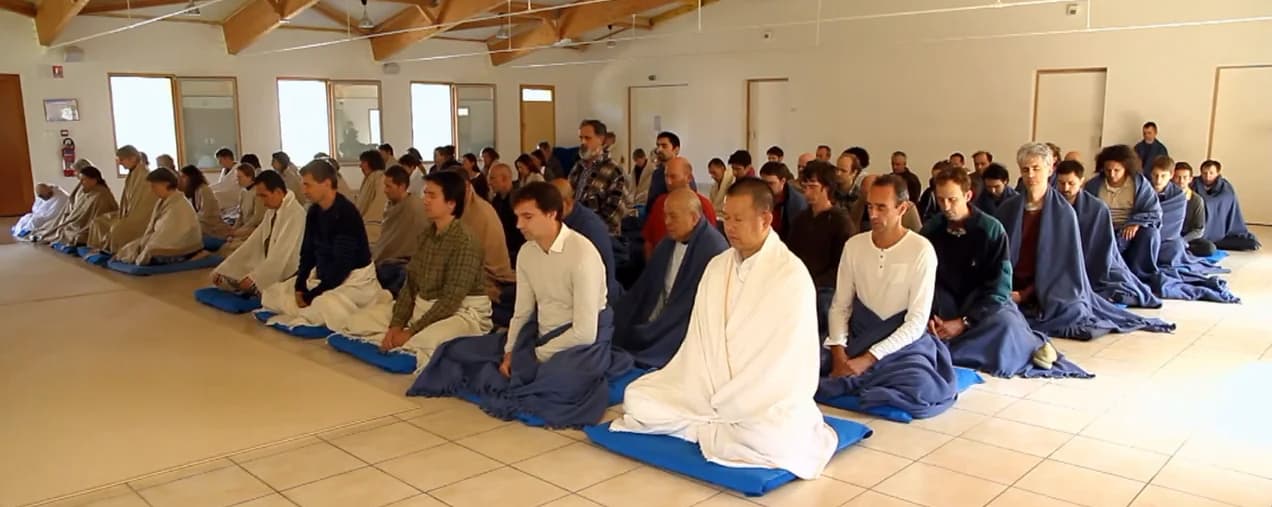
Vipassana is taught in 10-day residential courses, free of charge. Participants follow a prescribed Code of Discipline, learn concentration through breath awareness, and then practice observing bodily sensations with equanimity. The course concludes with loving-kindness meditation.
The Outcome
While results build with continued practice, ten days can bring meaningful insight and mental clarity. Vipassana is open to anyone sincere in their effort to find peace within and share it with others.
Vipassana Meditation in Corrections
The first prison course in North America was taught in 1997 at the King County North Rehabilitation Facility in Seattle, WA. Since then, courses have been held at facilities across the United States and Canada, including Donaldson Correctional Facility in Alabama, Maine State Prison, and Manitoba Youth Detention Facility.
Vipassana Courses in Corrections
The practice of Vipassana is made accessible to residents through structured, 10-day residential courses conducted inside corrections. These courses are identical in content and format to those offered to the public at Vipassana centers all around the world in the tradition of Mr. S.N. Goenka, and are available to anyone interested in learning the technique.
Course Structure and Funding
As with all Vipassana courses in this tradition, courses held within corrections are completely free to the students that participate and the corrections facility. There is no charge for courses held within corrections facilities, and they are completely free to the students of the corrections facility. All expenses are covered by donations from people who have completed a course and wish to give others the opportunity to benefit from Vipassana training. Similarly, the people who teach and serve during courses volunteer their time and do not receive any payment.
Course History
Courses in corrections were first offered in India in the early 1970s. Over the years, these courses have also been taught worldwide, in such countries as the United Kingdom, Israel, Sri Lanka, Myanmar, Nepal, Thailand, New Zealand, Taiwan, Mongolia, Colombia, USA, Canada, Mexico, Brazil and others. In all, more than 10,000 residents have attended ten-day Vipassana courses in corrections around the world.
This course changed the way I think. I can pause now before I act.
Course Graduate